How to Build a Digital Practice Without Social Media
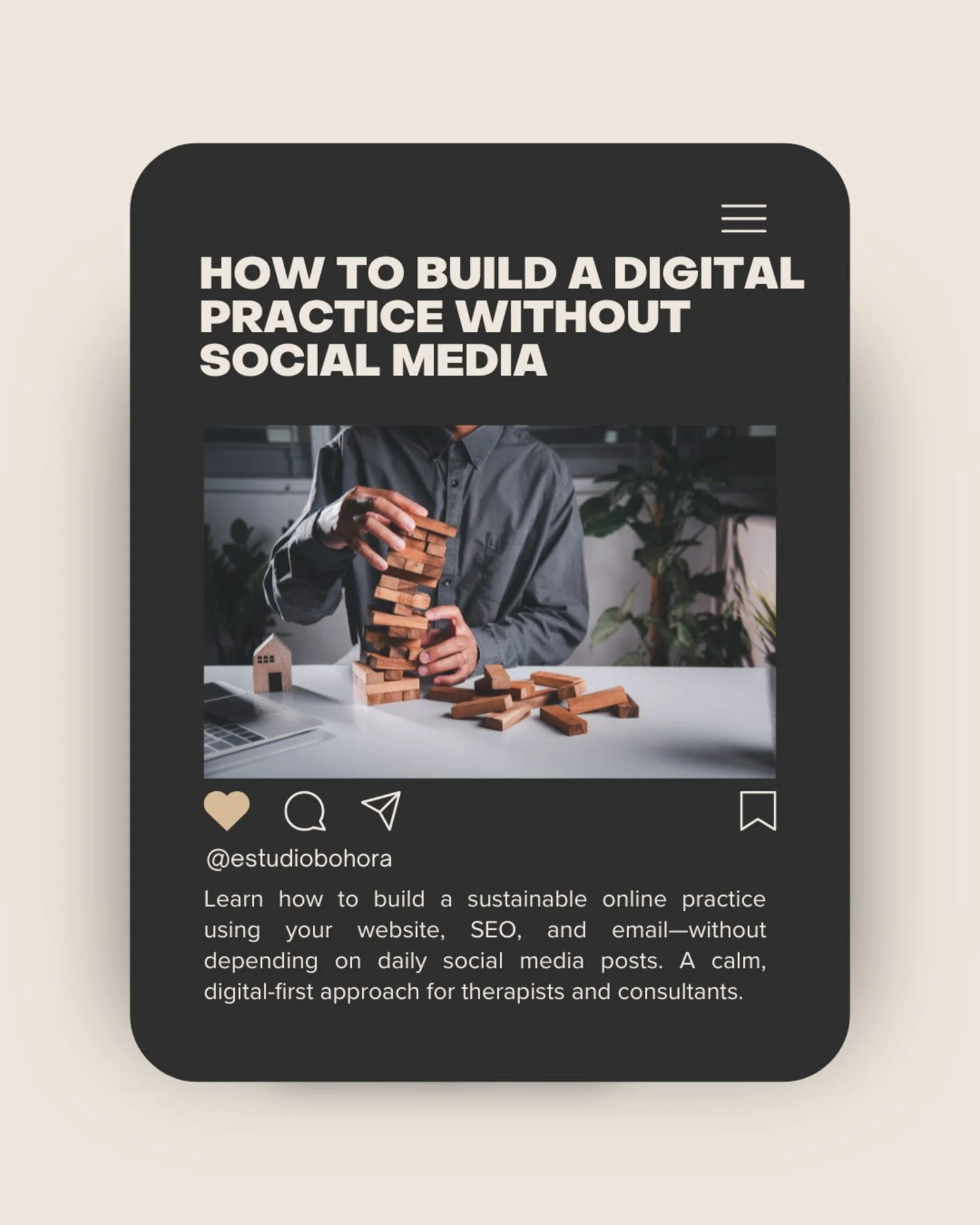
Starting an online practice or consulting business can feel overwhelming—especially when every piece of advice sounds the same:
"Post more"
"Be everywhere"
"If you're not on Instagram daily, you're invisible"
And yet, many therapists, coaches, and consultants follow that advice… only to end up exhausted, inconsistent, and unsure if what they're doing is actually working.
The problem isn't your commitment.
It's the way most online businesses are built.
A digital-first practice isn't about being louder online. It's about being intentional—and designing a system that supports your work instead of draining it.
Intentional design isn’t just a marketing choice—it’s what allows therapists and consultants to build systems that support a calm therapy practice, instead of adding more pressure to their work.
This guide will walk you through how to build a digital-first ecosystem that grows with you—without depending entirely on social media.
This post contains an affiliate link to SimplePractice. If you choose to sign up through this link, I may earn a small commission at no additional cost to you. I only recommend tools I genuinely trust and that support ethical, well-structured clinical practices.
The Common Mistake: Building Your Business Backwards
Most online practices don't fail because of lack of effort. They struggle because they start in the wrong place.
The usual pattern looks like this:
Create an Instagram account
Start posting consistently
Add a link-in-bio tool
Hope visibility turns into clients
(Spoiler: hope is not a business strategy.)
What's missing is structure.
Social media creates exposure, but exposure alone doesn't create clarity, trust, or sustainability. Without a foundation, you end up constantly reacting—posting to stay relevant instead of building something that lasts.
Visibility without infrastructure leads to burnout, not growth.
A digital-first approach flips this model entirely.
What "Digital-First" Actually Means (And What It Doesn't)
"Digital-first" is often misunderstood.
It doesn't mean:
Being on every platform (you are one human, not a content factory)
Automating everything
Posting daily content
Becoming a tech expert (if you can send an email, you're basically qualified)
It does mean:
Designing your system before your content
Prioritizing assets you own
Thinking long-term instead of week-to-week
Creating clarity before visibility
Here's a helpful way to think about it:
Your website is your command center.
Social media platforms are satellites.
Satellites support the system—but they are not the system itself. (And unlike actual satellites, these ones won't reliably send you useful data.)
The Digital Ecosystem: A Calm, Sustainable Model
A digital-first practice is built on an ecosystem, not a single platform. Each piece has a specific role, and none of them require constant performance. Behind the scenes, many therapists also rely on a centralized practice management system to hold scheduling, documentation, and communication—so the rest of the ecosystem can stay simple and calm.
Tools like SimplePractice are often used for this purpose—not because they promise growth or visibility, but because they reduce friction and mental load.
1. Your Website: Ownership and Trust
Your website is the one place online you truly control.
It allows you to:
Present your services clearly
Communicate your values and approach
Build trust before anyone contacts you
Set the tone and pace of your work
For therapists and consultants, a website isn't about selling aggressively. It's about clarity. When someone lands on your site, they should immediately understand who you help, how you help them, and what to do next—without feeling rushed or overwhelmed.
Think of it this way: your website does the work of explaining your work, so you don't have to repeat yourself in every consultation call.
2. SEO and Pinterest: Evergreen Discovery
Unlike social media posts that disappear within hours or days, SEO and Pinterest work over time.
They:
Support long-term discovery
Attract people who are actively searching
Compound with consistency instead of frequency
This is especially valuable for service-based professionals. A single thoughtful blog post—say, "How to Know If Therapy Is Right for You" or "5 Signs You're Ready for a Career Coach"—can continue bringing aligned visitors months or even years after it's published.
You write it once. It works quietly in the background. Forever.
Pinterest operates similarly: one well-designed pin linking to a helpful resource can generate traffic for months without you touching it again.
No dancing.
No trending audio.
Just helpful content people are actually looking for.
3. Email: Relationship and Control
Email is often overlooked early on, but it plays a crucial role in a digital-first ecosystem.
It allows you to:
Communicate directly with your audience
Build trust without algorithms deciding who sees your message
Share insights at your own pace
Create continuity between visits
You don't need weekly newsletters or complex funnels. You definitely don't need to segment your audience into 47 different categories based on which lead magnet they downloaded on a Tuesday.
Even a simple monthly email—sharing one idea, one resource, or one reflection—creates stability and keeps you connected to people who've already shown interest in your work.
The goal isn't to "nurture leads." It's to stay in genuine contact with people who might benefit from what you offer.
4. Social Media: Presence, Not Dependence
Social media isn't the enemy—it's just not meant to be the foundation.
In a digital-first practice, social platforms are used to:
Support visibility
Reinforce your message
Point back to your ecosystem
Not to replace it.
This shift alone often reduces pressure, anxiety, and burnout for professionals who already do emotionally demanding work. (You're also not waking up at 3am worried about Reels anymore, which is worth something.)
The Mindset Shift Most Professionals Need
Here's the shift that changes everything.
It's the move from:
Content → Infrastructure
Urgency → Intention
Noise → Clarity
Reaction → Design
Instead of asking: "What should I post today?"
You begin asking: "What system supports my work long-term?"
Digital maturity is choosing systems over stimulation. This same principle applies beyond digital strategy. In fact, a calm therapy practice is built on systems, not just space—online and offline.
For many therapists and consultants, this shift feels like relief. It creates space for depth, boundaries, and sustainability—both online and offline.
A Real-Life Example: Starting a Practice the Calm Way
Imagine a therapist starting a private practice online.
Instead of posting daily, they:
Build a clear, professional website that explains their approach and who they work with best
Publish one thoughtful blog post per month on topics their ideal clients are searching for (like "What to Expect in Your First Therapy Session" or "How to Talk to Your Partner About Starting Couples Therapy")
Create one useful free resource—maybe a guide to preparing for therapy or questions to ask a potential therapist
Maintain a simple, consistent presence on one platform, sharing insights when it feels natural
They're not chasing trends.
They're not performing for algorithms.
They're not wondering if their post about attachment styles will "do well."
Over time, their content compounds. Their message becomes clearer. Their system starts working quietly in the background—supporting their practice instead of demanding constant attention.
Six months in, they're getting inquiries from people who found them through Google, not because they went viral. A year in, their email list has grown to a few hundred people who actually want to hear from them.
This approach works because it focuses on what really supports a calm therapy practice—structure, clarity, and systems that don’t depend on constant visibility.
Why Design Matters in a Digital-First Ecosystem
Design is often treated as decoration—but in a digital-first practice, it's structural.
Good design:
Guides attention
Reduces friction
Communicates professionalism
Supports decision-making
A well-designed template isn't just about aesthetics (though that helps). It's about creating an experience that feels clear, calm, and intentional.
When someone visits your site, good design quietly answers questions like:
Where do I look first?
What's most important here?
What should I do next?
A template isn't just a layout. It's the structure that supports your work online.
This is why design choices matter more than trends—especially for professionals whose work depends on trust.
How to Start Without Overwhelm
If you're early in your practice or consulting business, you don't need to do everything at once.
Start here:
1. Define your hub Build or refine a clear, intentional website. Even a simple one-page site that clearly explains what you do and who you help is better than a perfect site you never launch.
2. Choose one discovery channel SEO or Pinterest—something that compounds over time. Not both at first. Just one.
3. Build slowly from there One blog post. One free resource. One clear next step for visitors.
Progress doesn't require pressure. In fact, sustainable growth usually happens when you're not in a constant state of urgency.
A realistic timeline? Most professionals start seeing consistent inquiries from their digital ecosystem within 6-12 months.
Not overnight.
Not viral.
Just steady, aligned interest from people who are actually looking for what you offer.
A Calmer Way Forward
Building an online practice doesn't have to mean constant visibility, endless content, or burnout-driven marketing.
A digital-first ecosystem allows you to:
Grow with intention
Protect your energy
Build trust quietly
Create systems that last
Because your work deserves a system that supports it—online and off, download the Digital Ecosystem Starter Checklist below.